Thursday, 27 February 2020

What's left, what's new? No up or down,just in and out and round about.:


This picture topped a blog I began after the collapse of an Occupation movement in 2011. I called that blog WOTS LEFT, straplined LOVE, EQUALITY, FREEDOM. At that time, I felt that predatory or parasitical banks were at the root of much global injustice, exploitation, inequality, war and, yes, climate change.With guidance from Ada, my wife, and help from her grandson I slapped gluey newspaper round a preformed pig, let it dry and painted it gold, Ada fashioned the rag doll and I touched up our planet on a ping-pong ball. We  enjoyed that. But the pig and doll disappeared from the steps of St Pauls, and I'm still worryng about high finance ruling and wrecking the only world and life we've got. But now I'm less certain that bankers are altogether greedier or stupider than the rest of us. Except that today we face a more deadly combination of climate chaos, deeper inequality, a resurgent right and rampant capital  that drives and feeds on the damage.

What's changed? Just more of the same but worse. And for me and some others perhaps, it now all seems more pervasive and personal. Fault lines of of division, suspicion and meanness come home to roost. Opening up between families, within ourselves as much as anywhere, and the rot sets in - not always for the worst. That requires a new look at both human nature and the wider nature we spring from, reflect and depend upon. What's it all about? And that must also go for what we mean by love, when love can be love of the wrong things, right things in the wrong ways, or fed by hate for others..

Convection usually means the vertical circulation between hotter and cooler liquids or gases. That's a key dynamic in current climate change, and may also help us understand some vertical revolutions and displacements in human human society and within ourselves as pent up energy and impulse bubble up. 'They say the world is spinning around,
                                                                     I say the world is upside down' 
                                                                     Jimmy Cliff    
https://www.youtube.com/watch?v=NG6Eop0x5UU

Read on if you have the time. I will be looking out for chinks of light and green shoots as well as darker stuff. I'm still for more Freedom and Equality, but sometimes big words become over-used, misdirected and abused..I'll hang onto the LOVE, because we all want more of that in some way. But I will also try to dig deeper into what the word might mean, Doesn't loving our neighbours as ourselves, also require that we recognise and embrace the worst in both as well as the best?

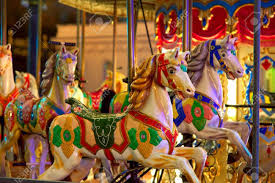
My updated word-list will now comprise Love, Labour, Language, Land and...Games.  Why games? Try this one: pick up those five marker words, stand them on end like dominoes, then arrange them in a circle like the signpost pillars in Stone Henge. Then knock down and remould as horses on a round about. If you look them you can spot an inner ring and give them names, not horses of apocalypse but more friendly Common ones. Gee up Common people, Common land, Common sense, Common-as-muck (turn over, dig in), and Commonwealth, Why not, and easy as you go...

https://www.youtube.com/watch?v=ECr1aLZH7lo
  
 .https://encrypted-tbn0.gstatic.com/images?q=tbn%3AANd9GcRcQzdTiNOQjApkLr7pkcpXJNMASSk9Ql41dctWP4VqFwkh8V5t


Wednesday, 15 February 2017

Ivor Goodjob meant no harm*

Our representative democracy is debased (George Monbiot) precisely because it has no base. The 'architecture' that must be changed is a pyramid of ladders, the bottom rungs of which hang above most people's reach.

Hierarchical gradients of income and wealth, knowledge and power span our economic, cultural and political life. A large, professionalised minority we pay, more or less willingly,to provide for us, mostly do better out of their jobs than we do. The working or non-working majority who get less than the national average wage also fail to qualify for any progressive career.

The decimated old white working class who voted Leave never voted, even with their feet, to automate their own jobs, relocate their industries or overpay the bosses and bankers who unemployed them. Few will be reading Monbiot, or me or any wordy broadsheet.

Yes what's needed is more direct democracy, but not confined to sensitive listening devices or top-down tick-box consultations. The direct democracy so sadly lacking is not mainly about choosing between preselected policies and representatives, but people deciding and acting for themselves, hands-on and face-to face, in their daily work and neighbourhoods.

How else can we begin to determine what's best, what's possible and how to go about it. Without this direct practical experience and social reconnection, how on earth can we decide what more to expect from the people we send up and away to speak for us?

How else can we create an effective base to inform the overarching economic and political bureaucracies that dispose of our time and money, do better for themselves than most of us, on the coat-tails of a megabuck, national and global, master-class?

Hannah Arendt on bureaucracy:
The greater the bureaucratization of public life, the greater will be the attraction of violence. In a fully developed bureaucracy there is nobody left with whom one could argue, to whom one could present grievances, on whom the pressures of power could be exerted. Bureaucracy is the form of government in which everybody is deprived of political freedom, of the power to act; for the rule by Nobody is not no-rule, and where all are equally powerless we have a tyranny without a tyrant.

Charles Dickens on bureaucracy:
Chapter 10 of the Charles Dickens novel Little Dorrit. The chapter title is: "Containing the Whole Science of Government," and it includes the following:
"The Circumlocution Office was (as everybody knows without being told) the most important Department under Government. No public business of any kind could possibly be done at any time without the acquiescence of the Circumlocution Office. Its finger was in the largest public pie, and in the smallest public tart....
"This glorious establishment had been early in the field when the one sublime principle involving the difficult art of governing a country was first distinctly revealed to statesmen. It had been foremost to study that bright revelation and to carry its shining influence through the whole of the official proceedings. Whatever was required to be done, the Circumlocution Office was beforehand with all the public departments in the art of perceiving -- HOW NOT TO DO IT.
"Through this delicate perception, ... and through the genius with which it always acted on it, the Circumlocution Office had risen to overtop all the public departments, and the public condition had risen to be -- what it was. …


The Castle by Franz Kafka
Regarding night interrogations: the night is less suitable for negotiations with applicants for the reason that by night it is difficult or positively impossible completely to preserve the official character of the negotiations. This is not a matter of externals, the forms can of course, if desired, be just as strictly observed by night as by day…the official power of judgment suffers at night. One tends involuntarily to judge things from a more private point of view at night, the allegations of the applicants take on more weight than is due to them, the judgment of the case becomes adulterated with quite irrelevant considerations of the rest of the applicants’ situation, their sufferings and anxieties. The necessary barrier between the applicants and the officials, even though externally it may be impeccably maintained, weakens, and where otherwise, as is proper, only questions and answers are exchanged, what sometimes seems to take place is an odd, wholly unsuitable changing of places between the persons.”


And The Trial by Franz Kafka
You can’t go out, you are under arrest.”
“So it seems,” said K. “But for what?”
“We are not authorized to tell you that. Go to your room and wait there. Proceedings have been instituted against you, and you will be informed of everything in due course. I am exceeding my instructions in speaking freely to you like this…. If you continue to have as good luck as you have had in the choice of your warders, then you can be confident of the final result.”


Chris Hedges updates (in the last 15 minutes of his Wages of Rebellion) what Harry Belafonte once called the incarceration of black America. Now says Hedges, it's modern slavery and the return of the company store in privately run prisons.


'Another day older and deeper in debt..' If it were only black America suffering, poor whites wouldn't have turned their backs on shabby normality to vote for snake-oil Trump. And if it were wealth as such that riled them, they wouldn't have voted for Trump, any more then our own systematically deprived voted for Farage. The elites our poor whites rebel against are not confined to Washington – or Brussels or Westminster – but much nearer home, in everyday schools and offices etc
Hannah Arendt, who covered the trial of Eichman, called his conduct 'banal' – however evil the results - and homed in on a more general'thoughlessness' of bureaucracy. Chris Hedges talks of the indelible blindness of privilege, and Dickens and Kafka wrote long ago on what happens to people caught up in such systematic thoughtlessness.

Here's a trailer for Le Proces, aka The Trial which scared the daylights out of me in the 1960s, and left me in love with Jeanne Moreau (not to mention Orson Wellies):


Hedges, who teaches black prisoners (partly to heal his privilege-blndness) says a lot are of prisoners are still in debt to their private prisons when they leave. He says the black man shot in the back as he ran away from traffic cops was afraid of being sent down again for non-payment of those debts. His name was was Walter Scott and this Guardian report has a video of his banal execution in what could be any old park round here.
.
https://www.theguardian.com/us-news/2015/apr/07/south-carolina-police-officer-murder-charge

 *Ivor Goodjob was a name coined in an unemployed writers' group for a fictitious official from what was then the Department of Health and Social Security. I think the department has changed its name and hardened its criteria for disability, deservedness etc


Thursday, 5 January 2017

Haves or have-nots, we need each other.

Here's a letter of mine, in response to the Observer's Will Hutton, as it appeared in the paper today (08.01.2017)
  
The care we’d want ourselves
For better health we need a better society, writes Will Hutton (“Good health is born of a good society. Little wonder that we’re suffering”; Comment, ). Less inequality, fairer taxation and more support for those of us, old and young, who most need it. But that may also require abroader shift from dependence on top-down, centralised provision, the array of goods and services we pay for but can’t control or understand. Somehow, we must get a better grip on what we can understand, agree and do together for ourselves.
That’s where society begins to make sense and social care is a natural starting point. It’s a face-to-face and hands-on business, with the expertise of experience and fellow-feeling. Hospital and social service departments would collapse without a threadbare but resilient safety net of family and friends, neighbours and workmates. And among the self-appointed carers are hundreds of thousands of children with parents or siblings who depend on them.
Two recent proposals suggest ways forward: Liberal Democrat former minister Norman Lamb has proposed a dedicated tax for health and social care, while the chief nursing officer for England, Jane Cummings, calls for more systematic support for care at home. A clearly costed and targeted national insurance would help. Priority for home-care, paid or otherwise, would save a lot of institutional and hi-tech provision. It’s also what most of us would want for ourselves.
Greg Wilkinson
Swansea


Of course Hutton is right that the secret of good health may lie in a good society. But he can never quite admit that what's bad about society as we know it is an economic system based on private wealth and bureaucratic hierarchy, a built-in trickle up of wealth and power from the many who have less to the few who have most.
I'm fed up with saying this in more or less palatable ways, and almost as fed up with an oppositional left that seems happier attacking its enemies than coming forward with better ways of doing things. Yes, everything could and should be different, but what are we actually doing about it? No revolution will work unless we can find ways of doing things differently among ourselves and seeing where to go from there. Sniping at more or less democratically elected leaders gets us nowhere if we have nothing better to offer, not just in theory but in practice. Replacing THEIR leaders with OUR leaders will leave us with more of the same unless we have a wider body of people already engaged in doing things better and more democratically for themselves and others. To find those better ways, we've got to get to choose good starting points, addressing more or less immediate needs with means that come to hand.
Representative democracy and elected governments will always let us down unless they are grounded in and responsive to a commonwealth of more direct democracy. Commonwealth involves common people (as in the House of Commons, the millions of acres of Common land enclosed by propertied parliaments and the old word Commons, for a common provision of essential rations etc). When I referred to 'our depleted social infrastructure' I wasnt just thinking of in- or out-of-work benefits but of children playing in the street, women meeting in corner shops and over garden fences as they hung the washing out, men meeting and organising in nearby factories and mines, works outings, holidays and union branches, local pubs and clubs, congregations in their Sunday best etc etc. Facebook, online shopping and petitions cant fill that gap unless they help to bring us back together face to face with something to be getting on with when we meed.
Meanwhile, oppositional socialism, ritual protest against present evils, may help bring down top-heavy systems or it may provide a safety valve to keep them in place. To replace them with something better we need a more constructive socialism, doing the best we can for ourselves and each other with the means to hand. Only from that basis of shared commitment, organisation and experience can we build a bridgehead and get through to secure the help we will still need from more centralised powers, whether political or corporate, that now monopolise resources, expertise and power.. 
Easier said than done, and my letter to the Observer below is only a tiny step. Published or not, it helps to clarify my own thinking, and lead me towards what could be further steps - with more than a bit of help from my friends.

Here's the last bit of my Observer letter that was NOT published, for more or less obvious reasons:
'A recognised, respected and properly funded Neighbourhood Care system could pilot a revival of other depleted social infrastructure, giving more content to so-called 'community'. From health and social care, more of us could \reach out and work together on other matters of common interest, in whatever space and time we can find between homework and paid employment otherwise.
Greg Wilkinson
PS The recent upturn in deathrates has a lot to do with funding cuts and growing inequality, and research also shows a link between inequality and obesity, an obvious cause of early death.On the other hand, a longer life is not always a better one, and a society that allows and encourages three quarters of its middle-aged citizens to fatten themselves for the slaughter might also offer them a painless way out. If we're free to self-harm, at whatever the cost to ourselves and fellow citizens, we might also be free to die at a time of our own choosing, with dignity and the agreement of loved-ones and qualified medics.

(Ed: If you prefer, the PS could stand as a self-contained alternative letter. I'm 80, with vested interests. My first job was as a ward-orderly in a workhouse refitted as hospital (c 1955, when the NHS too was young), caring for old people with nowhere else to go. About 50 years later I helped look after my own parents, in and out of hospital when they became incapable of looking after each other. The were not poor, which made things easier. At about that time, my wife did respite days for young carers, who seemed very happy to be making things out of willow sticks with her, playing and exploring our then neck of wood and stream in Wales.)'

Other questions arising::when does age become a disability, and who cares for the carers, young or old? Do only those with special needs and disabilities need caring for? I once heard Dennis (Beast of Bolsover) Skinner ridiculing privileged people who call for others to stand on their own two feet. 'That's easy to say, when you're strolling down the fairway on a sunny day. But no one comes into the world or leaves it on their own two feet.'

But... Old Labour's great post-war nationalisations, and even the wonderful NHS, were also top-down, centralising measures that made more and more of us subject to remote provision and control, and opened the way to top-down privatisation. And now we must also wonder how long can more and more of us depend on more and more expensive care while resenting every extra penny it costs in tax? And how come that all professional carers are trained to get their patients or clients doing all they can for themselves, while the rest of us expect everything to be provided and done for us.The trouble with capitalism is that it turns us all into needy dependents and willing slaves to the big providers who employ and sell to us.  Private and public state and corporate sectors interlock and fuse, and what difference does it make whether an enterprise is for profit or not-for-profit if their effective hiearchies and differentials of power and reward remain unchanged?

To reverse or balance this upward flow of wealth and power requires an effective counter force in the other direction, from base to summit if we accept the present pyramid model, with all ladders meeting at the top, and most of us nearer the bottom. For that we need to take back control of, and responsibility for, our own lives and circumstances wherever we can and as  far as we can reach. As individuals, families, neighbourhoods, towns etc, we must decide and do what we can for ourselves and each other. That's what direct democracy means, and only when that falls short should we delegate our authority to more remove representative bodies. That does NOT mean we could ever be self-sufficient, and we will always need more centralised powers to do what's best done on a larger scale, and to secure communication and a level playing field between regional and local centres. The soon-to-be-late-lamented European Union had a clumsy label for the principle that could also apply within nation states. 'Subsidiarity' meant that each part could do what it reasonably could for itself and only become subject to more central authority when that became impractical, local self-sufficiency, in what might be seen as a community-of-communities.

In my Observer letter I suggested that Social Care could become a pilot for broader renewal of social infrastructure. Why should that human foundation for any succesful enterprise in life be cut back further and left to rot while new post-austerity goes to roads and railways, runways and broadband?  A revival of local, collective and communal activity could extend from interpersonal social care to a range of other more or less neglected activities, from children's play and after-school clubs to youth and sports, libraries and museums, parks and allotments, and green no-mans-land in older council estates.

It's not a choice between voluntary effort and professional services, paid and unpaid labour but how to bring them together in better ways, so that formal training and institutional resources can reinforce grass-roots initiative.. An integration of popular and professional, top-down and bottom up Some of this is already happening, but for the wrong reasons and often the wrong ways, because local authorities and public service departments have been forced to cut costs and replace paid with unpaid laboour rather than combine the best of both. It's not a matter of either/or, them-or-us, not win or lose, but both joined up. My father once wept when, at the end of an early televised marathon, the front runners joined hands and crossed the line together.

Beware abstraction, and over-the-rainbow fantasies. The link below gives a better idea of what I meant about fattening ourselves for the slaughter. How can any Health Service or Social Care take the weight of such an overhang?

Obesity, like mental illness, suicide and other sorts of self harm, increases with inequality, at least in better-off societies. It is not only or even mainly self-induced...  It wasn't always that way and here are some verses I wrote about a scrawny old man - who am I to talk? - who was admitted to the hospital ward I worked in more than 60 years ago:

He'd lived in a house they'd condemned
With his wife and a yard full of hens
They got them both out in the end
But couldnt make him see sense.

They broke the old couple apart
Two bodies and one broken heart
In a workhouse refitted as hospital
For the aged and chronically ill

The old man stood up for his rights
Got out of his bed in the night
And told us who came to push him back in
He'd been feeding his chickens.

So we tied a net over his bed
Put sedatives in with his tea.
In a week and a day he was dead..
Could the same ever happen to me?

Why not? 
But at least my mother lived a lot longer and died quite happily. When she left us in Wales she went to a residential home nearer where she'd lived and knew people. After a year or two there she tired of getting weaker, ill and incapable despite good care. For a while she talked piteously about it being time to die, as if we might help. Then she stopped eating. The kind women who laid her out left her wedding ring on her finger and pinned a rosebud to her nighty. They'd noticed she could smell what flowers were in a bunch even before it was unwrapped.

Earlier this week,  Ada (my wife) took down the little Christmas tree in the hall and pulled the cloth off the heavy garden flowerpot I'd stuck it in. Popping out of the soil were a dozen white shoots, and on one side, where the light must have got in, stood two wide-open dark blue irises.

A flash of hope in the Pandora's box of 2017. But for all of us, may tides of war and desolation turn before too long and let more humankindness in. Wherever we live, haves and have-nots cant get far without each other

Monday, 19 December 2016

Seasons greetings, lighter days to come

                      Inline image


TASHTEGO BELIEVED RED

A hand comforts held out to one who's sinking;
And what founders deeper than a world which sinks?
Like a lost ship it never once says thanks,
Since no single hand can save its timber drinking
The poisoned salt its sides awash are flanking,
Thirsty for web of weeds or sift of sandbanks,
Its last music gunshot, its gesture poise of tanks
Over the wood where swathes of death are ranking...
But witness, the hand is no hand but an arm
Curving itself with the strong swimmer's flex
- A thousand arms which thresh against the blast
Of a regressive ocean, even whose calm
Is derelict with that impartiality which wrecks
- Yet regard, regard, the red banner nailed to the msst!

                              Malcolm Lowry 1909-1957
                              best known for novel 'Under the Volcano.
                              and seaborn short stories 'Hear us, oh lord...'


PS
The image is a collage of junkmail etc begun by Ada and finished - with sweating palms - by me. I'm 80 tomorrow and find myself more blessed with wife and family than Lowry was. Take comfort too from other facts of life at sea: tides turn and even sailing boats can make headway upwind, not straight on, but tacking this way and that. (Same with truth: 'He that will reach her, about must and about must go' - John Donne, though now he might say She)

Monday, 5 December 2016

Broke-back Democracy


Like this old Liberty ship, western democracies now seem to be falling apart. The SS Richard Montgomery broke its back on a sandbank off the coast of Kent c1944 with a cargo of explosives on board. What sometimes scuppers our so-called social democracy is the deeply unstable – undemocratic and anti-social – economy on which it habitually rests. But in this case the sandbank is not the work of inhuman nature but corporate wealth and the very rich few, mostly men, who shape it in their own interest. Or what they imagine that to be.

The current break in political formation across UK, US and EU reflects this underlying economic instability. Relatively prosperous politicians and fellow-professionals are left clinging to the superstructure, while those they were meant to represent and managed are left to sink or swim. A motley crew regroup on improvised rafts, shake their fists at elites and kick out at more-unfortunates to try to get on board. Whoever, wherever, whatever... 

New Pied Pipers, old tunes... Fairy tales and nautical images apart, I've tried to get the gist of it in a Castro letter to the Guardian Weekly. An earlier version was spiked by the Observer, but the Weekly is often more progressive, international and cheaper than its Guardian/Observer stablemates.

To the Editor
Guardian Weekly 06.12.2016

Fidel Castro didn't set out to be a Stalinist dictator, he got pushed. How could Cuba not have turned to the Soviets when the US blocked its sugar crop? How could a new leader countenance loyal opposition with the CIA breathing poison down his neck? Hadn't impeccable parliamentarians,Mossadegh in Iran and Allende in Chile been killed in coups prompted by London and Washington?
Democrat or not, Fidel made most of his people healthier, prouder, more educated and - for a long time - better off.  We sometimes hear the truth about ourselves from enemies and Castro was right that  'capitalism has neither the capacity, nor the morality nor the ethics to solve the problems of poverty'.

The same now goes for the 'social' democracy that overlooks and oversees our anti-social, top-down economy. Long before cold war or globalisation, US founding fathers and the UK mother of parliaments had a lot to answer for. From plantation to wage slavery, enclosures to company law, property ruled. Down the ranks of private industry and public services, we do what we're told and take what we get from bosses you dont elect...Or else. This duress,by cash not lash ensures that power and prosperity, education and opportunity trickle up.

When things come unstuck, endemic cruelties surface in repression and revenge, the worst of both worlds. Now it ca n no longer be a choice between democracy and economic justice by other means. Democracy itself must look to other means. Representative democracy, whether in elected government or company boards, must be grounded in a more direct democracy wherever we live and work. We all need time and space to meet, discuss, decide and act for ourselves, find commonsense in commonwealth.

GW
Swansea


PS 'Equality rules' says Dame Louise Casey in a race report for Mrs May, only to focus her findings on Muslim women, burkas and the Muslim Men who keep them down: http://www.bbc.co.uk/programmes/p04k6v58
What's missing in this talk of social equality, as in most talk about social democracy, is any clear recognition of the economic inequality underpinning it.
What separates Pakistani and Bangladeshi Muslims from their more liberal whiter brothers and sisters is not so much religious prejudice - on either side - as the economic divisions that so effectively keep us apart. 
It so happens that most Muslims in the UK are also among the poorest people in the UK, with all that goes with it: poor housing, poor schools, poor jobs and little prospect of upward mobility. 
Race and class lines often correlate. Poor Muslims like many poor whites and so-called JAMs fall back on old instincts and traditions and make a virtue of necessity. It's not only Muslim men who are more likely to take it out on their wives if they can keep up themselves:  the more you're put down outside, the more important to be Master at home.
Social inequalities - race, gender and class - play out the economic injustices underlying them. In posher parts of Ireland, South Africa and central London, racial and religious differences may not disappear, but many of the tensions around them melt away, and people more often work together. Shared prosperity is the best mixer.

Wednesday, 23 November 2016

Bullying still hurts, and inequality still rules.

To the Editor
South Wales Post 18.11.2016

Cheers to Newton schoolchildren for their Red Card Racism banner. Now we could do even better. Racism is only one front for the bullying that makes life a misery for many at school. And now, with widening fault lines across society, and social media always to hand, humiliation and despair can follow children home.
When it comes to bullying, it's not just a matter of reporting, punishing and healing wounds. Clear rules are needed and recognised procedures for reporting, sanctions and redress. And a respected referee.
I'm sure a lot's already being done, and it's a long time since I taught in schools  But more recently I have met children who felt put down and ostracised, with nobody to turn to. Safe at home, I looked around for clues on current remedial action, and found this headline 'Swansea Council to show bullying the red light.'  But about bullying among teachers not children. On a link to Llangefelach Primary I found a detailed anti-bullying policy. As I write 'Children in Wales' have an Anti-bullying Week, while an Anti-bullying Roadshow tours the UK.

Back to the Newton Red Card, the football reference makes sense. The new approach could be rolled out in a clear-cut, enforceable rule-book on bullying and mutual respect. Not just Red Cards, but Yellow for lesser offences, and a Sin-Bin as last resort. Yellow for abuse, obstruction and harassment, straight to Red for violence. The referee (Care and Conciliation Officer?) would be a recognised figure in every school or year, keeping watch and making friends, taking up reports from victims and witnesses, intervening, mediating and enforcing.
The Sin Bin sanction would not be pain-for-pain but time for reflection, an opportunity to uncover motives and promote redress. Isolation is already a punishment. On BBC news the other night (R4 PM 16.11.2016) a former school-girl bully said 'If your own life's a mess, you can make a mess of someone else's.... Bullies need care as well.'.

Prevention is better than cure. Schools must give prime time for the discussion of ongoing personal and social issues that are often nearer to children's heart than exam subjects. Better understanding among children, and between children and teachers, would reduce tension and distress, free up concentration across the curriculum. Basic human communication is too important to be left to chance and not-so social media.

GW


THREE RESPONSES:

1. From (not so) old friend May Magee  22.11.2016

For over thirty-five years I worked in Play schemes, Youth Clubs, School, Out-of-school, and Out-of-work groups, probation service, drugs projects, mental health, etc. This was mostly in what are now described as ‘disadvantaged areas’. There were usually volunteers, along with poorly paid workers. When bullying was noticed or reported, it was often recognised, by the volunteers and workers, that the bullies were in need of support and that they might have problems at home. Poverty and hardship does not make people nice, although not all people who live in such circumstances turn to bullying, there are nasty and nice people in all walks of life.
Sometimes those who grow up in ‘disadvantaged’ circumstances even develop an acute sense of injustice and set out to change society. It is quite clear that those who gave their time to talk with and support ‘disruptive’ young people realised that it was their impoverished life circumstances compared to how they saw others live, that influenced their behaviour. ‘Inequality’ was not a word that was used; neither was ‘empowerment or ‘capacity building’.

When people gave up their time, often after a long day’s work, to help set up activities such as bicycle building/maintenance, sports, scouts, ramblers, brownies and so on, it was because they realised that it helped people to have something to focus on, to work with others, something to be proud of, to have ideas recognised, and to be listened to, talked with, (not at), and get to know each other. These activities benefited the individuals and fed back into the communities in which they lived.
This is just one lifetime experience, for generations, and throughout history it was recognised that the differences between those who had more and those that had little fostered bullying. Roman slaves, prisoners of war to those living under occupation, house maids, refugees etc. History and literature is littered with examples. From talking with others engaged in social work, housing projects, drug projects, education, community police, and other face to face employment it is clear many of them realised that impoverished life circumstances made a difference to people’s behaviour, especially when there was obvious wealth and privilege beyond reach.

My recent experience of voluntary engagement with young people, schools and refugees does not show any great difference in the lives of people who have a great deal and those who do not. The well-paid jobs, money and power are still at the top, while those employed to engage with ‘disadvantaged’ people and the people they are engaged with have proportionately as little as forty years ago. There have been improvements in pay and expectations of living conditions but not enough. There are still people living in conditions that foster bullying, and still vulnerable people who have no hope of escaping their environments.

Over the years so many people, even from ‘underprivileged’ backgrounds have recognised the need to redress the imbalance of life experiences and expectations. Volunteers and paid workers realised that bullying stemmed from the feeling of injustice created by the difference between rich and poor. Over thirty years ago I wrote an essay on the effect of lifestyles presented on television and advertising on those who could not afford to enjoy the holidays, activities, goods. This is likely to fuel the sense of inadequacy and failure to have or provide for a family. Borrowing money is an option, being in debt compounds negative feelings about self.

It is great that eminent people on the radio and in print point out that there is more bullying in societies where there are big differences in income, environments and lifestyles. It hard to believe that well brought up, well educated, well paid, academics and researchers were the first to notice this. However, the hundreds of thousands of pounds that have gone into salaries, research, publications, and presentations have not been wasted if their findings prompt positive changes for those who have little. Hopefully a change is going to come, there can be a better life for everyone, and it can be done by example by those who have as well as by the continuing devotion of those who give their time freely and the over-stretched, underpaid, face to face workers. Those who have little might recognise and respect the change of wealthy lifestyles, reducing their resentment and sense of injustice and creating an atmosphere where people flourish and act more kindly to each other.


2. From youngest brother Richard (Spirit Level) Wilkinson 22.11.2016It's not academics and researchers who first recognise relationships between bullying and inequality, unemployment and poor health, etc, but the recognition tends to seem more like a private opinion or hunch until demonstrated in a form which is easier to share publicly. When relationships are demonstrated in hard data, they become more than just a private perception easily denied by those with a different view, and that should increase people's confidence in their intuitions.
The graph below comes from Frank Elgar in Canada [Elgar FJ. et al. School bullying, homicide and income inequality.  International Journal of Public Health 58, 237-245, 2013.]  The numbers up the side are the percent of 11year olds who bullied others at least twice in the previous month. Along the bottom is a measure of income inequality - less inequality on the left, more on the right.The percentage of kids bullying others varies from around 2% in the more equal countries to around 20% in the less equal ones - a ten-fold difference!  And rarely in discussions of policy to reduce bullying do people talk about reducing income differences across societies as a whole, but a good deal of this kind of statistical work suggests, what many would expect, that smaller income differences weaken the grip of status and status insecurity on us all.


3. From (middle) brother Martiin 22.11.2016

The big pattern about differences in power and wealth that lead to many kinds of cruelty,is not the whole story. As May M shows in her examples of smaller groups of people doing more constructive things together, how things are done on the small scale can exemplify or oppose what’s s going on more generally. So even in an unequal society, there will be working groups or maybe whole companies where people listen to one another, and enjoy working together.

Same with schools.
Jean, a friend during my education training year in 1966, spent her working life after that in primary schools.  After some years of experience, she told me about a way of working with her primary class not only to avoid bullying and teasing, but to get the children to care for and look after one another.  So if a child had a problem, or a new child with a difficulty or difference was coming in to the class, there would be ‘circle time’ with the others to think how they could help.  They were aware of the child’s needs, and engaged in meeting them. I take from this the idea that while we certainly should have policies and practices to spot bullying and prevent it continuing, we should also be more optimistic, and help people to know they have power to help as well as to hurt.

And while I long for people to understand the big picture, and to change it, there’s plenty of scope for small action too.

Martin


Bullying within the family? 

May M's response above speaks for itself. In my own family, I was the eldest with a built-in advantage over two younger brothers and sister. Younger brother Martin felt that, not so much because I hit or abused him but because I was bigger, stronger and more likely to win (especially if I named the games, made up the rules). Richard the youngest of three brothers was in his early teens when I left home, felt eclipsed when I came back to stay. Whereas I did alright and Martin very well at school, Richard was judged more suited to practical than academic pursuits, and clever enough to know what that implied. Susan was not just the youngest but a girl. She felt it when she was sent to a less expensive school, but did alright both there and afterwards. That said, it was good-with-his-hands Richard who won acclaim with ground-breaking research and big books on inequality. And the damage that does, not only to the poorest but most or all of us. 'Eclipsed' was his word, not mine, but most of us know what it means and how it feels. In our family, I was eldest, but that also put me first in line for our mother to get angry with...  We made up at the end of each day, and again towards the end of her life.
In some traditional societies, most people can look forward to a measure of respect and authority as they get old. When nothing much changes, those who live longest may often know best. Now that things change faster and most of us live a lot longer, we have more time to forget and what little we know may no longer apply, unless....

Thursday, 17 November 2016

Last call for Swansea Tidal Lagoon

The Chancellor's Autumn statement next Wednesday November 23 may decide future of Swansea Bay Lagoon. Here's a response to a piece by Observer science-editor Robin McKie last summer, suggesting that only nuclear energy could fill the energy gap)
 
Observer 07.08.2016
'Big Issue – Hinckley Point'

Fusion or fission, nuclear power is not the only reliable alternative to fossil fuel (Robin McKie 'If not nuclear power then what?'). Sunshine, wind and waves vary with the weather, but tides still rise and fall and the flow can be safely harnessed in and out.
With nuclear fission not yet in sight, this simpler seapower could be a better bet than rejigged EPR at Hinkley Point C. In his Aurumn budget last year, George Osborne flagged up the prospect of a tidal lagoon power project in Swansea bay, only to put it out for review when the price of oil and gas came down..
This much we may already know. The start-up cost for Swansea Bay stands at £1.3 billion as against £18 billion for Hinkley Point. The planned productive life of a lagoon is more than 100 years compared with 60 years for Hinkley Point C.  Over the years, with rising output from larger lagoons around the coast, tidal input to the national grid could match Hinkley nuclear in cost and quantity.
The modest Swansea Bay venture is set to pilot a fleet of bigger enclosures with two-way turbine arrays to harness an exceptional tidal range, extending from Welsh and British coasts across the channel to France. The technology of lagoon-wall dykes and low-speed turbines is relatively simple. Lagoons carry no heavy overhang of radio-active waste and decommissioning. They are most unlikely to blow up and In case of major breakdown the damage would not be insupportable.
A government decision on funding for Swansea Bay now awaits the outcome of an independent review later this year. With luck and common sense, this could be ready in time for Philip Hammond to give the go-ahead for this first tidal lagoon in his first Autumn budget, opening the way to a wider raft of private investment and jobs along a supply chain in waiting.Better a Swansea sprat to catch an eco-friendly mackerel than a dubious go-for-broke upstream in Somerset. With Swansea Bay as my back yard, would say that, wouldn't I. Though it doesn't have to be either/or.
Greg Wilkinson